

Basement waterproofing and foundation repair companies get found first when their Google Business Profile and website match what homeowners type after they find water or a crack. Use the right category, list the towns you actually serve, and add pages for both services and symptoms. Then answer those calls fast, especially after a storm.
Around Philadelphia, plenty of homes are older and have basements, so the work is there. The question is whether your company is the one a homeowner finds. Here is how to make that more likely.
What “found first” means for this trade
The moment a homeowner finds water or a crack
Most homeowners do not plan to hire a waterproofing company. They walk downstairs after a heavy rain and see a wet floor, a damp wall or a crack they never noticed. Then they grab their phone. Whatever shows up in that moment, on Google Maps and in the search results, gets the first shot at the job.
How this is different from water damage restoration work
Restoration is emergency cleanup, where referral partners matter a great deal. We covered that in how water damage restoration companies get more jobs. Waterproofing and foundation work fixes the cause: drainage, sump pumps, cracks, settling. Some calls are urgent, and some are planned inspections from homeowners who have worried for months. Your marketing has to work for both.
Get the Google Business Profile right
Google says local results are mainly based on relevance, distance and prominence, which is how well known a business is. See Google’s page, Tips to improve your local ranking on Google.
Categories that match the work you actually do
Google asks you to pick the primary category that best describes your business, from its own list. You cannot make up your own. That is in Google’s help page on managing your business category.
- If waterproofing is your core work, choose the closest waterproofing category in Google’s picker as your primary.
- Add a foundation category only if you really sell foundation repair.
- Keep it to a few. Google’s guidelines for representing your business say to use the fewest categories that describe your core business.
- Keep your business name clean. Adding “Basement Waterproofing Philadelphia” to the name breaks the same guidelines.
Service areas, hours and photos of real jobs
Most waterproofing companies work at the customer’s home. Google’s page on managing service areas says to remove your address from the profile if customers do not visit you there, and to set your service area by city, ZIP code or region, as specifically and accurately as you can.
- List the towns you really serve, whether that is Philadelphia, the suburbs or South Jersey. Do not set up fake offices to show up in other towns.
- Keep hours honest. If you answer calls after hours in wet weather, say so.
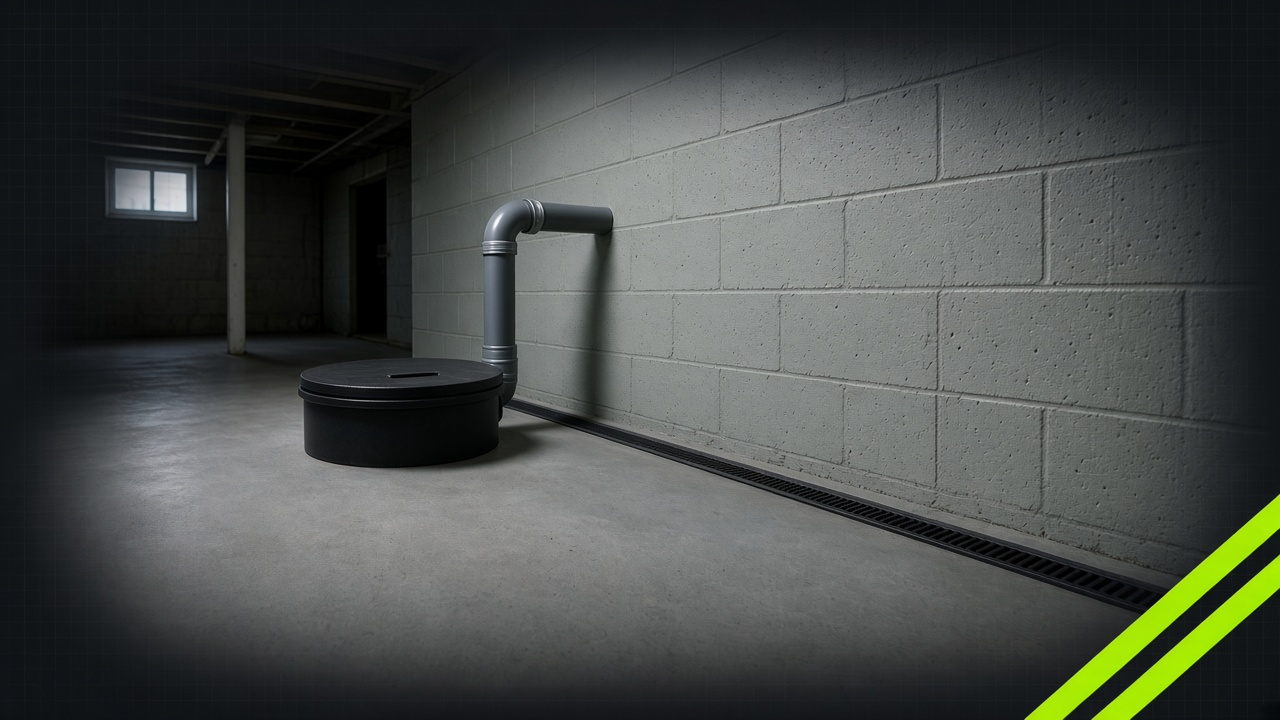
- Post photos of your own jobs. Drains, membranes and sump pits disappear once the work is done, so photos taken during the job show what the homeowner is paying for.
Website pages that match how people search
Service pages (waterproofing, sump pumps, foundation repair)
Give each service you sell its own page: interior waterproofing, exterior waterproofing, sump pumps, wall crack repair, foundation repair. Explain it plainly, show real jobs and make the next step easy. Here is how we approach service and symptom pages that are clear to read. If you also finish basements once they are dry, our guide to marketing for remodeling contractors covers how to win that work.
Symptom pages (wet basement after rain, leaking walls, cracks)
Many homeowners do not know the trade words. They search the problem, like “water in basement after rain,” “leaking basement walls” or “basement smells musty.”
So add a few pages that start with the symptom, explain the likely causes in plain language and point to the service that fixes it. Only build them for work you really do. This is a big part of local SEO for contractors, and it helps you with getting found in the Philadelphia area.
Reviews after the job, and after the next rain
This trade has a timing problem. The install often finishes on a dry day, and the homeowner may not know if it worked until the next heavy rain.
- Ask at the end of the job about the experience: the crew, the cleanup, the communication.
- Check in after the next heavy rain. Ask how the basement held up. If it stayed dry, that is often the more useful review for the next homeowner reading it.
- Reply to every review, good or bad, calmly and with a next step.
- Never pay for reviews. Google’s tips to get more reviews say offering incentives for reviews is strictly prohibited.
Here is how we handle review requests.
Answering fast when a storm hits
Storm days are when people look. If a call goes to voicemail and nobody calls back for a day, that homeowner may already be talking to someone else.
- Have a plan for who answers during heavy rain, including evenings and weekends.
- Set up an instant text back for every missed call, so the homeowner knows a real person will follow up.
- Book the inspection on the first call when you can, and follow up on the ones that did not book.
That is the kind of missed-call follow-up after a storm we set up for contractors.
A simple 30 day plan
- Week 1: Check your Google category, service areas, hours and business name against Google’s guidelines. Fix anything that is off.
- Week 2: Make sure each service you sell has its own clear page, and add real job photos.
- Week 3: Write two or three symptom pages for the problems you fix most often.
- Week 4: Set up review requests at job completion and after the next heavy rain, plus a text back for missed calls.
Frequently asked questions
How do basement waterproofing companies get found first on Google?
By making the Google Business Profile and the website work together. Google says local results mainly come down to relevance, distance and prominence. Complete category and service details, real reviews and photos, and pages that match what homeowners search all help. Nobody can promise a map position.
How do I get basement waterproofing leads from Google?
Set up a complete service-area profile with the right category and the towns you really serve. Add original job photos, service pages and symptom pages. Then answer every call and form quickly, especially after heavy rain.
How do I get foundation repair leads?
Use the same owned system, with foundation-specific pages and photos for cracks, settling and wall repair. Add a foundation category to your profile only if you really do that work. If your company only does waterproofing, say so clearly. Honest pages bring better-fit calls than stretching into work you do not sell.
What Google Business Profile category should a waterproofing or foundation company use?
Pick the primary category from Google’s own list that best matches most of your work. If waterproofing is your core offer, start there. Add a foundation category only if that work is real, and keep extra categories few. Do not put keywords in your business name, which Google’s guidelines do not allow.
Should my site have pages for symptoms like a wet basement after rain, or only for services?
Both, when you can keep them accurate. Homeowners often search the problem, like water in the basement after rain or leaking walls, before they know the trade name. Service pages still matter for people who know what they want. Only build symptom pages for problems you actually fix.
When should a waterproofing company ask for reviews?
Twice. Ask when the job ends, about the crew, cleanup and communication. Then follow up after the next heavy rain, when the homeowner knows whether the basement stayed dry. That second review is often the more convincing one. Never offer anything in return for a review.
How is this different from marketing a water damage restoration company?
Restoration is emergency cleanup after a flood or burst pipe, built on referral partners. Waterproofing and foundation work is about being findable for wet basements, drainage, sump pumps and structural concerns, including planned inspections. Our water damage restoration post covers that side.
Want to be the first call after the next storm?
That is what The Local Growth Engine is built for: your Google profile, your website and your follow-up working together, for contractors across our service-area pages. Request a Strategy Call and we will look at where calls are slipping through. Want a quick read first? Try the Revenue Leak Calculator.