


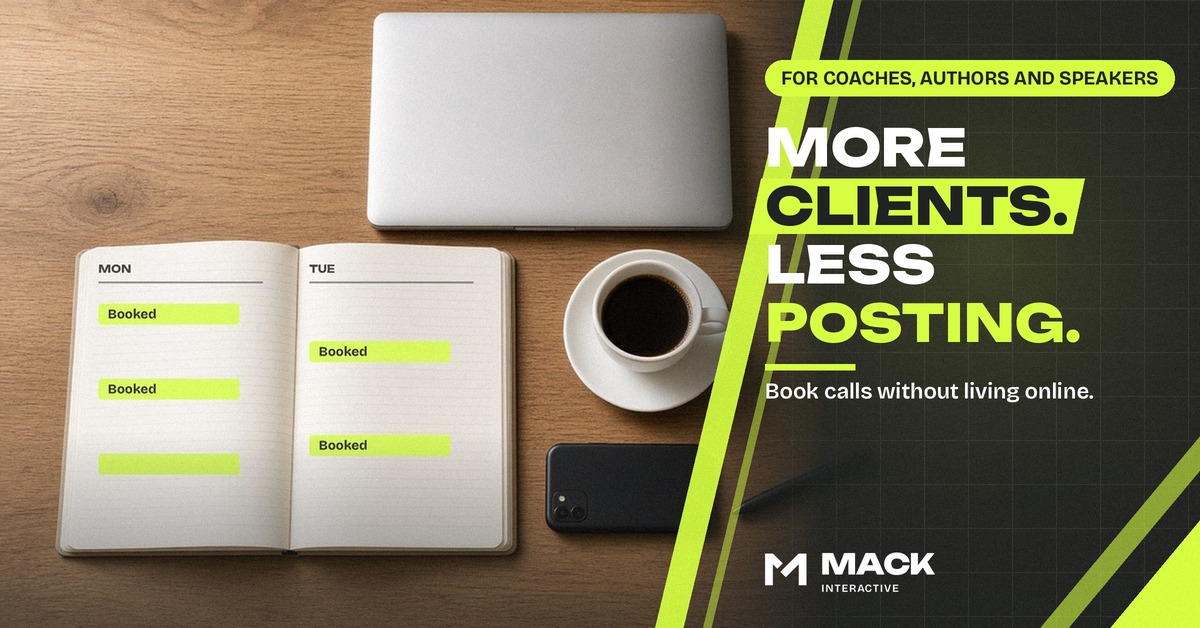
You do not need to post every day to get coaching clients. You need a clear offer, one dependable way for the right people to find you, and a simple path from first interest to a booked call, with follow up so nobody slips through. Start with the people who already know your work, then build from there.
How do coaches get clients without living on social media?
If you are a good coach with a thin client list, you have probably been told the answer is more content. Post every day. Go live. Try the new platform. And maybe you have tried it, and ended up tired, with a few likes and not many booked calls.
Here is the plain truth: content can start conversations, but clients come from the conversations. Social media is one lead source, not the only one, and it is not the enemy. You just do not have to live there to fill your calendar. What you do need is a simple system you can run around your actual coaching work.
Get clear on who you help and the result you help them reach
Everything gets easier when one sentence explains what you do. “I help new managers in tech lead their first team with confidence” lands. “I help people reach their potential” does not. When people hear a clear sentence, they know right away whether it fits them, or who they know it fits.
Write yours down. Who do you help? What changes for them after working with you? If you cannot say it in one breath, that is the first thing to work on. A clear client acquisition strategy starts here, not with a posting schedule.
Pick one lead source you own and do it well
It is easy to spread yourself thin across five channels and do none of them well. Pick one dependable way for the right people to find you, and give it real attention for a few months. That might be:
- An email list you write to every week
- Speaking at events or guesting on podcasts where your people already are
- Referrals from past clients and colleagues
- Real conversations on LinkedIn
One, done well. Add a second once the first brings in steady conversations. Good lead generation for coaches is less about volume and more about showing up in the same place, consistently, for the same people.
Build a simple path from interest to a booked call
When someone says “I might be interested,” what happens next? If the answer is a few back and forth emails trying to find a time, you will lose people. Keep the path short:
- They hear about you, from a talk, a referral, an email or a conversation.
- They see one clear next step, like a short guide or a direct invite to a call.
- They book a time with a booking link that connects to your calendar.
- They get a reminder before the call, and a follow up after.
That is it. That is the core of what we build in The Client Acquisition Engine: a clear offer, a dependable lead source and a simple, followed up path to a booked call.
Where should I look for my first coaching clients?
Start with the people who already know your work. They trust you already, and that makes every conversation easier.
Your warm network: past colleagues, clients and communities
Make a list of people who have seen you at your best: former coworkers, past clients, people from your professional groups, your alumni network, your faith or community circles. You are not going to pitch them. You are going to tell them, plainly, who you help and what changes for them, and ask who they know who fits.
Referrals: make them easy to give
People want to refer you. They just do not know how. Make it easy:
- Give them your one sentence, so they can repeat it.
- Tell them exactly who to send your way, and who not to.
- Give them a simple link they can forward.
- Thank every person who sends someone, whether that person becomes a client or not.
Show up where your people already gather: talks, podcasts, groups
Your future clients already spend time somewhere: at industry events, in professional associations, on podcasts they listen to on the commute, in online groups built around their work. Show up there as a helpful voice. Offer a talk. Pitch yourself as a podcast guest with a clear topic. Answer questions in groups without selling. When you speak, give people one clear next step so the talk turns into conversations.
How do I find coaching clients on LinkedIn without posting all day?
LinkedIn works best as a place for conversations, not a stage. You do not need to post daily for it to help.
- Fix your profile first. Your headline should say who you help and the result, not just your title.
- Have real conversations. Connect with people in your niche, comment thoughtfully on their posts and send short, personal messages. No copy and paste pitches.
- Invite the right people to talk. When a conversation shows real fit, ask if they would like a call.
A few good conversations beat a lot of posts.
Do I need a website or a funnel to get coaching clients?
Not to start. A clear offer, a booking link and follow up is already a simple funnel. You can add more once you know what people respond to.
What the simplest version looks like
If you do build something, keep it small:
- One page that says who you help, what changes for them and how to book a call
- One free resource that helps your ideal client with a real problem, in exchange for their email
- A short email sequence that follows up with people who download it
- A booking link on every page and in every email
You can grow from there. It is tempting to build a big, complicated setup before you have had enough conversations to know what your clients actually want. Do it the other way around.
What happens after someone says “tell me more”?
This is where a lot of coaching clients slip away. Someone shows interest, life gets busy, and nobody follows up.
Follow up without being pushy
Following up is not pushy. It is helpful. People are busy, and a kind reminder is often what they need. Send a short note after a first conversation. If they download something, check in a few days later with a simple question. If they book a call and miss it, reach out with a new link. Keep every message short, warm and easy to reply to.
Where automation helps, and where it should not replace you
Follow up automation is great for the repeatable parts: sending a welcome email, reminding someone about a call, following up after a download. It saves you time and keeps people from falling through the cracks.
But automation should not replace you in the moments that matter. Discovery calls, personal notes and real questions deserve a real person. Use tools to handle the routine, so you have more time for the human part.
A simple weekly rhythm for getting clients
You do not need hours a day. Try this every week:
- Reach out to five people in your warm network or niche with a personal note.
- Follow up with everyone who showed interest in the past two weeks.
- Show up once where your people gather: a talk, a podcast pitch or a helpful answer in a group.
- Send one email to your list with something useful.
- Check your calendar. How many calls are booked? What brought them in? Do more of that.
Frequently asked questions
How do coaches get clients?
With a clear offer, steady conversations with the right people, referrals and simple follow up. Content can start conversations, but clients come from the conversations.
How do I get coaching clients without social media?
Use your warm network, ask for referrals, speak or guest on podcasts where your audience already is, and build an email list. Social media is one lead source, not the only one.
Where do I find my first coaching client?
Start with people who already know your work. Tell them exactly who you help and what changes for them, and ask who they know who fits.
How do I find coaching clients on LinkedIn?
Make your profile say who you help and the result, have real conversations with people in your niche, and invite the right ones to a call. A few good conversations beat a lot of posts.
Do I need a funnel to get coaching clients?
Not to start. A clear offer, a booking link and follow up is already a simple funnel. Add more once you know what people respond to.
How many lead sources should I start with?
One, done well. Add a second once the first brings in steady conversations.
Is email still useful for coaches?
Yes. Your email list is an audience you own, so you can stay in touch without depending on a feed.
Ready for more booked calls?
If you want help building a clear offer, a dependable lead source and a simple path to booked calls, let’s talk. Request a Strategy Call.